Tamarac Tree Care
954-710-8778
Tree/Shrub Trimming and Pruning
Tree trimming and pruning play a critical role in having a healthy landscape. It involves removing the dead, diseased, or limbs that are putting structures and people at risk. There are many benefits to having it done including improvement in appearance, growth, health, and longevity. It is something that many homeowners overlook, that is where we can help with regularly scheduled maintenance.
Your tree will give you signs it is time to trim your trees. Dead and dying branches or damage from a storm are easy to spot, some signs might not be as obvious. Overgrown branches that are starting to be close to your home, other structures, utility structures, or into walkways and roadways need to be trimmed for safety and proper clearance. Foliage is too thick or too thin can be a sign that a trimming may be needed to improve sunlight penetration and air circulation. Trees that are growing in an uneven way or leaning significantly may need to have a pruning to help balance shape and ensure stable growth. Your tree may start to attract some unwanted guests of the wild life variety, indicating that a trimming is in order to reduce and prevent pests. Call us today to book an assessment of your tree care needs.
Anatomy of a Tree
Crown (Canopy):
- Leaves/Needles- Turns sunlight, water, and C02 into sugar and oxygen
- Branches: Support the leaves and transports water and nutrients, provides the tree's structure.
Trunk:
- Outer Bark: The outer layer that protects against damage, pests, and weather.
- Phloem (Inner Bark): Transports sugars from leaves to the rest of the tree.
- Cambium: A thin layer of cells that produces new xylem and phloem making the trunk and branches grow.
- Xylem (Sapwood): The live wood that actively moves water and minerals up from the root of the tree all the way to the leaves.
- Heartwood: The central core of xylem that is dead, no longer transports fluids, providing structural strength.
- Pith- very center of the trunk that helps move the nutrients throughout the tree. Older trees often have a very small compared to the size of the heartwood
The Root System:
Provides
- Anchorage- holding the tree firmly in the ground
- Absorption- absorb water and dissolves minerals from the soil
- Storage- stores carbohydrates for the tree to use as energy
- Structure- some roots thicken and branch out to form a deep, wide base of support for the tree, smaller roots provide the absorption of water and minerals
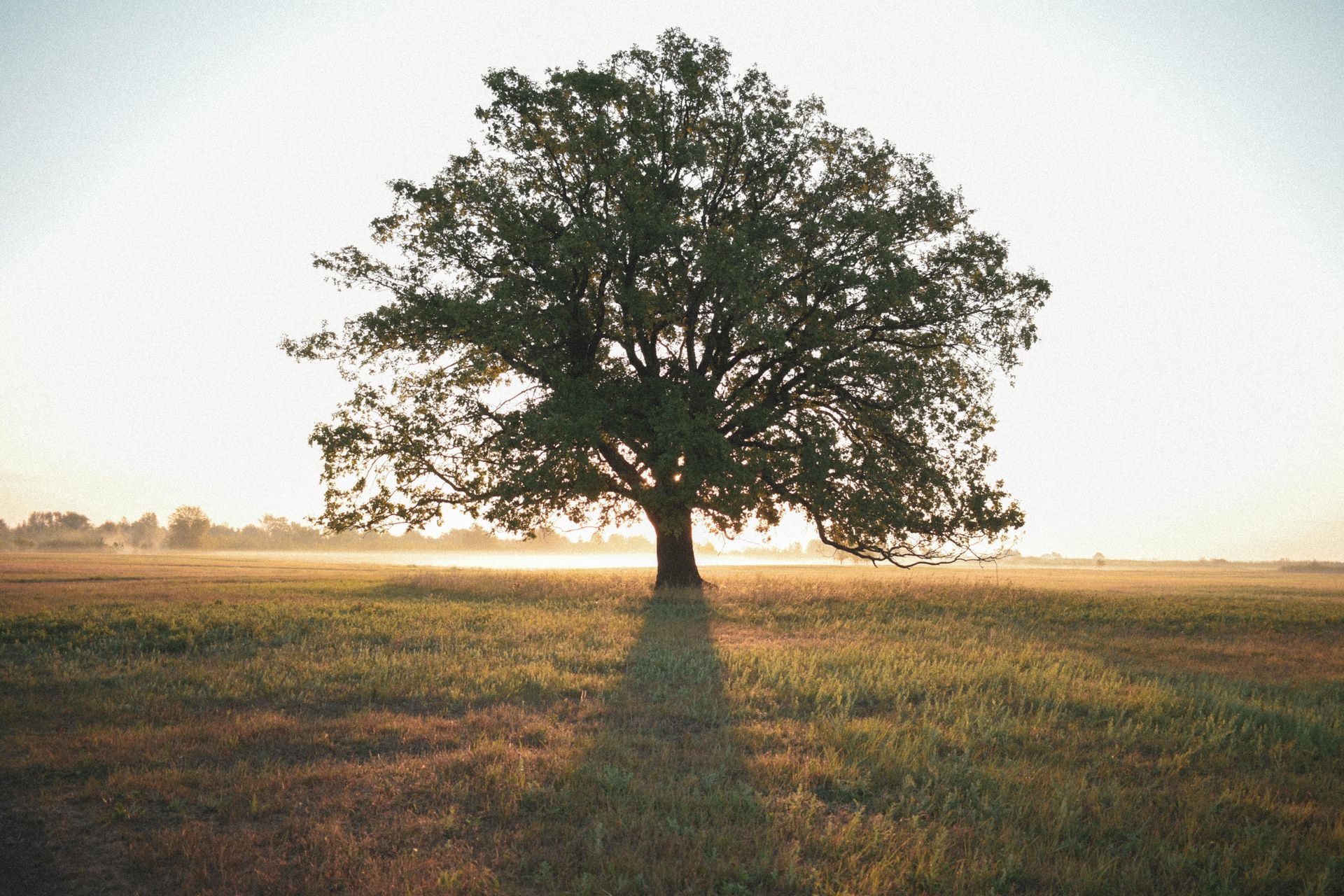
Why Tree Trimming and Pruning Matters
- Health: When trees have regular maintenance diseases and pests are prevented from spreading. With the removal of dead and diseased parts of the tree the overall health of the tree is ensured, allowing for a long, healthy life.
- Safety: When trees get overgrown they become a safety hazard, especially during storms. With regular maintenance these limbs are removed, reducing the risk of falling and damaging to your property or causing physical injury.
- Appearance: Having well-maintained trees is appealing and adds significant value to your property. Our arborist can shape your trees to complement the over landscape that you have in your yard. It is a great way to increase your curb appeal.
- Healthy Growth: When proper pruning techniques are used the growth of strong, healthy branches is encouraged. Our arborists make strategic trims that improve the tree's structure and direct the growth.
The Tree Trimming Process
- Assessment: Our highly qualified arborists will begin by doing a thorough assessment of your trees to diagnose any special needs and the best plan for trimming and pruning
- Planning: Our team will plan the best approach for the specific needs of your trees, taking into account the tree’s species, size, age, and location. We ensure that our methods are unique to each tree’s needs.
- Implementation: We use our state-of-the-art tools to carefully trim and prune your trees, focusing on the health of the tree as well as the look of the tree. We also use state-of-the-art safety equipment to ensure that all the work is done safely.
- Cleanup: Once your trees are looking great, we make sure to leave your property clean and tidy.

When Should I Schedule Tree/Shrub Trimming and Pruning
Trees will show signs that they are in need of trimming/pruning. They will start to dead or broken branches, limbs that are growing across each other or rubbing against each other, or excessive dense growth. They may also develop cracks, fungus, sunken bark, or uneven growth. These are all signs that your tree needs to have a professional assessment.
Keep Your Trees and Shrubs Healthy with Our Trimming and Pruning Services!
Professional tree maintenance goes much further than the visual appearance. Not only does it improve the way your trees look, it is critical for health and vitality. Our professional services will strategically remove diseased, damaged, or branches that are crossing allowing proper air circulation and prevent pest infestation. The trimming and pruning process will enhance your curb appeal as well as allowing your tree to develop strong branch structures that can better withstand Florida’s severe weather conditions. Contact us to see how our services can enhance the life of your trees.
Trimming and Pruning Services We Offer
Crown Thinning
Crown thinning removes select branches from the tree to improve light penetration and air movement through the crown of the tree. This helps reduce stress on limbs from wind and can help prevent disease by allowing sunlight to reach the leaves.
Crown Cleaning
Crown cleaning reduces the risk of injury and damage from falling debris and branches by removing dead, dying, diseased, or weak branches. Helps keep the tree healthy by reducing stopping crossing and rubbing damaged branches on healthy ones.
Crown Raising
Crown raising removes the lower branches of the tree to provide clearance for buildings, vehicles, and pedestrians. This is mostly used in urban environments and residential areas.
Crown Reduction
Crown reduction decreases the size of a tree. This is often used for utility line clearance, allowing the tree to be preserved under the power lines or reducing the height of the tree to prevent interference with building structures. Crown reduction maintains the natural form of the tree while promoting healthy structures.
Deadwooding
Deadwooding removes dead or dying branches from the tree. This prevents decay-producing fungus from infecting the other parts of the tree and reduces the risk of injury or damage from falling branches.
Pollarding
Pollarding is when the upper branches are removed to promote dense growth of foliage and branches. This is usually started then the tree is young and is continued during routine maintenance. This is used for aesthetics or in certain urban areas where trees must stay at a certain height, year after year.
Vista Pruning
Vista pruning is done by selectively removing branches to allow for scenic views while maintaining the health of the tree. This is popular in areas that have water or landscape views. This does require careful planning and maintenance to keep the view and maintain the structure of the tree.